

Home About Us Articles For Cyclists Contact Privacy
Knowledge Base

Articles on Co-Ownership Law

Each article draws on a specific area of Polish housing law. Read in any order — every piece stands alone.

Owners raising hands during a voting procedure at an apartment community meeting
Voting Procedures

How Share-Based Voting Works in Practice

When a resolution is put to a vote at an owner meeting, the law provides two possible methods. The first is a headcount vote: each owner present has one vote regardless of apartment size. If the result is contested, or if any owner formally requests it, the vote shifts to the share-based method.

In share-based voting, each owner's vote carries weight proportional to their udział — their ownership share of the common property. This share is expressed as a fraction of the total and is registered in the land and mortgage register (księga wieczysta). The sum of all shares across all apartments equals the whole.

A resolution passes when owners holding more than half of all ownership shares vote in favour — not just more than half of those present at the meeting. This distinction matters. A resolution can fail even if every owner in the room supports it, if those present collectively hold less than half the total share.

Absent owners may grant written proxy to another person. The proxy does not need to be notarised for most resolutions, but it must be in writing and presented at the meeting. Votes cast by proxy are as valid as votes cast in person.

Management

What the Zarządca Is Required to Do

The property manager's obligations are set out in the Act and in the management contract. They cover day-to-day maintenance of common areas, arranging and maintaining building insurance, keeping financial records, convening the annual owner meeting, and enforcing the community's internal regulations.

The zarządca acts on behalf of the community, not on behalf of individual owners. Decisions about significant expenditure typically require a resolution. Routine maintenance within approved budgets can be authorised by the zarządca alone.

Owners have the right to inspect accounts and documentation. A zarządca who refuses to provide financial records on reasonable request is in breach of their obligations under the Act.
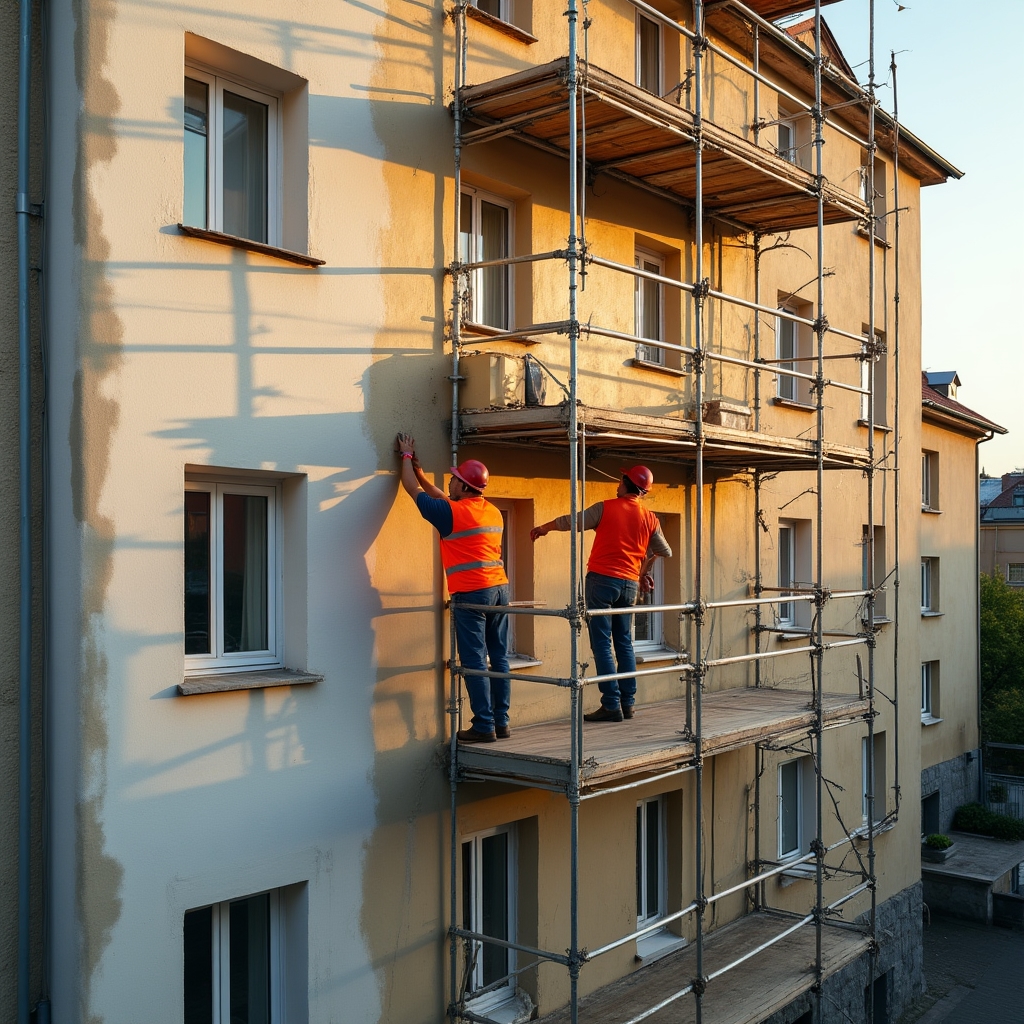

Construction workers renovating the facade of a residential apartment building in Poland
Repairs and Maintenance

The Fundusz Remontowy in Detail

The repair fund is not optional. Once a resolution establishes it, all owners contribute according to their ownership share. The monthly amount per square metre is set by resolution and can be amended by resolution.

Eligible expenditures include structural repairs, roof replacement, exterior wall and facade renovation, lift modernisation, replacement of shared plumbing and heating infrastructure, and upgrades to common areas such as stairwells and entrance lobbies.

The fund balance belongs to the community. It does not revert to individual owners if they sell. When an apartment is sold, the new owner inherits the benefit and the obligation. The seller does not receive a refund of past contributions.

Person carefully reviewing an annual financial report for a housing community
Finance

How to Read the Annual Financial Report

The annual financial report is the primary document of accountability in a wspólnota mieszkaniowa. It must be presented at the annual meeting and is subject to approval by resolution.

The report typically contains four main sections. First, an income statement showing owner contributions received, including both the operational cost allocation and the fundusz remontowy contributions. Second, an expenditure breakdown by category — utilities for common areas, maintenance contracts, insurance premiums, administrative costs. Third, a balance of the fundusz remontowy showing opening balance, contributions received during the year, expenditure from the fund, and closing balance. Fourth, any notes on outstanding receivables — usually unpaid contributions from owners in arrears.

When reviewing the report, compare actual expenditure against the approved budget. Significant variances should be explained in the accompanying notes or verbally by the zarządca at the meeting. You are entitled to ask specific questions. The meeting must address them.

Challenging a Resolution Under Article 25

Article 25 of the Act on Ownership of Premises (Ustawa o własności lokali) provides the mechanism for contesting a resolution an owner considers unlawful, contrary to the community's governing documents (umowa lub statut), or harmful to the interests of an individual owner.

The challenge must be filed at the district court (sąd okręgowy) covering the property's location. The six-week window runs from the date of adoption at a meeting, or from the date the owner was notified in cases where voting was conducted in writing (tryb obiegowy).

Filing a court challenge does not automatically suspend the resolution. The building works or financial decisions covered by the resolution may proceed while the case is heard. If you wish to prevent implementation, you must apply separately to the court for interim measures (zabezpieczenie).

Grounds for challenge are assessed by the court on a case-by-case basis. The existence of a legal defect in the voting procedure, a substantive conflict with the law, or demonstrable harm to an owner's legitimate interests are all potentially valid grounds.